Skip to content

The Reenactment of the Wounding of Stonewall Jackson

In Spotsylvania County last week a remarkable historic event was reenacted by a small group of reenactors.

General Thomas "Stonewall" Jackson lay wounded after mistakenly being shot by his own men at a reenactment of the Battle of Chancellorsville in Spotsylvania County, Va 2013.
Stonewall Jackson lay wounded at a reenactment of the Battle of Chancellorsville in Spotsylvania County, Va 2013.

On May 2nd 1863, after a brilliantly executed flank attack on the Union Army at Chancellorsville, General Thomas “Stonewall” Jackson, the Confederacy’s most popular figure, was mistakenly shot and fatally wounded by his own troops.  That evening General Jackson, so anxious to seal his victory at Chancellorsville, leads his staff out into The Wilderness in an effort to reconnoiter the enemy.  Hearing the sounds of spades and axes in their front, Jackson halted his party.  The Federals were digging-in and the sounds convinced Jackson that his effort to destroy the Union Army that day at Chancellorsville had come up short.
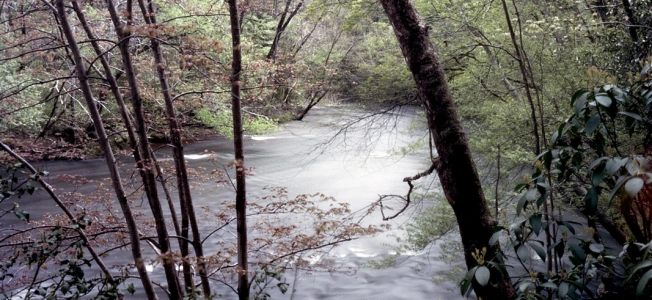
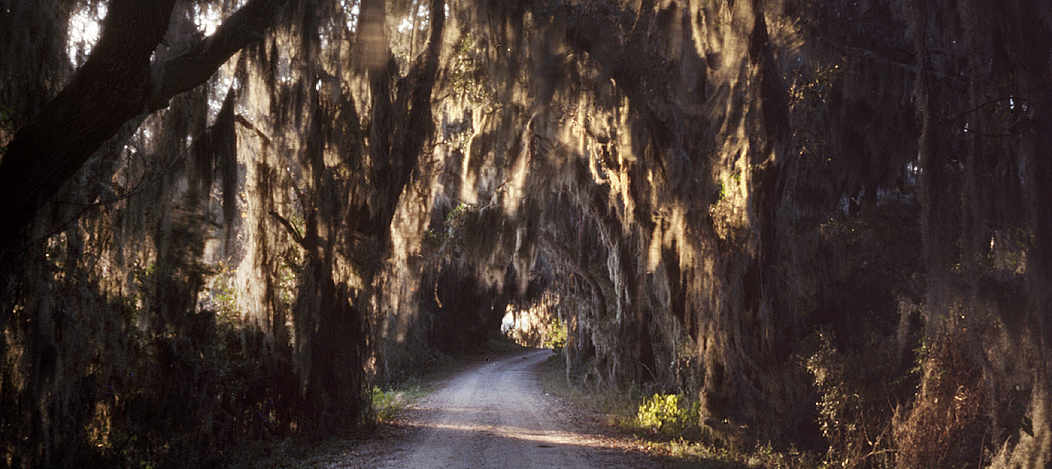
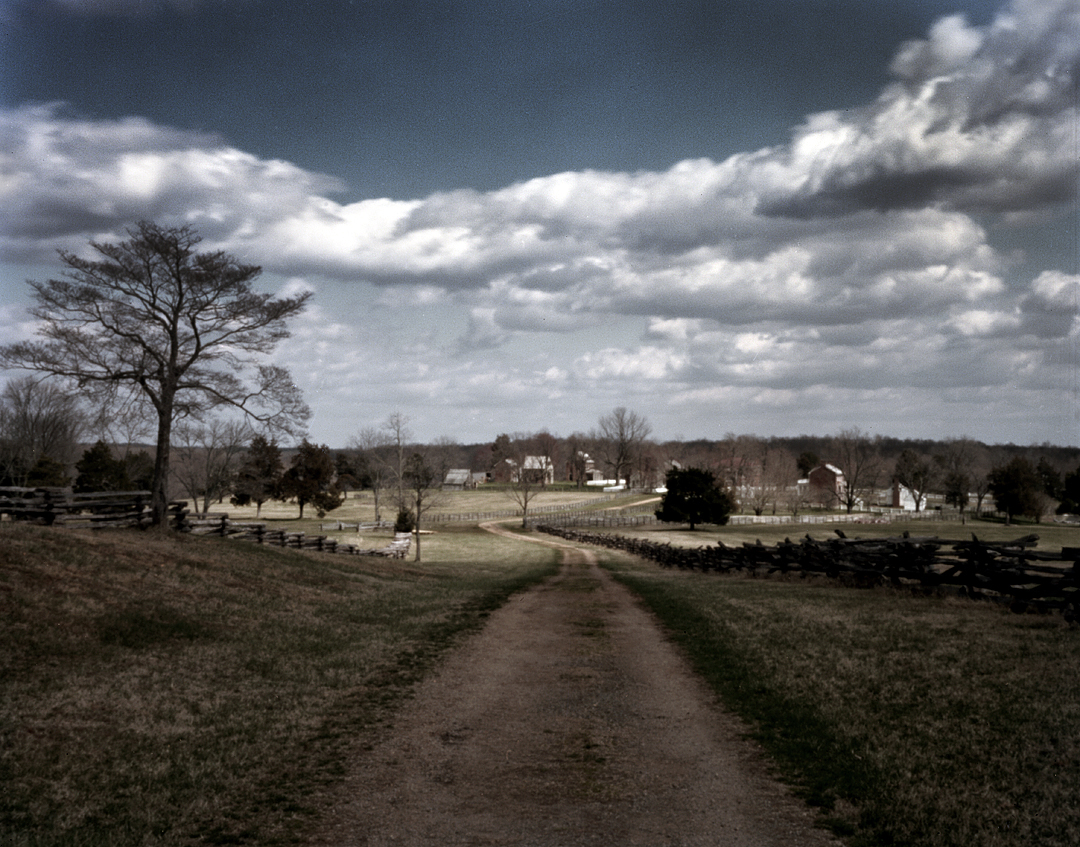
The forest road and site of Stonewall Jackson's wounding on the Battlefield at Chancellorsville, Va 2013.

The forest road and site of Stonewall Jackson’s wounding on the Battlefield at Chancellorsville, Va 2013.


Turning back and approaching his own lines in the dark Jackson and his party are mistaken for Federals and fired on by soldiers of the 18th North Carolina Infantry.  Fatally wounded Jackson is carried from the field and taken to nearby Ellwood Manor.  At Ellwood Jackson’s left arm is amputated and the general is taken by ambulance to Guinea Station, a small railroad hub 25 miles away in Spotsylvania County. Weak from his wounds Jackson remains at the depot, develops pneumonia, and dies at Guinea Station eight days later.

The Reenactment

Guinea Station, the site of Stonewall Jackson's death,  Spotsylvania County, Va 2013.

Guinea Station, the site of Stonewall Jackson’s death, Spotsylvania County, Va 2013.

In May 2013 a small contingent  of reenactors played out the drama of Jackson’s wounding in a non-spectator event designed to commemorate this historic and notorious case of mistaken identity.  Jake Jennette, organizer and General Lee for the weekend, arranged for a group of reenactors from North Carolina to reenact the wounding of Stonewall Jackson.  These North Carolinians were reenacting in the same unit their forefathers fought in at Chancellorsville, but more importantly, the same unit that mistaken shot Jackson on May 2nd. 1863.

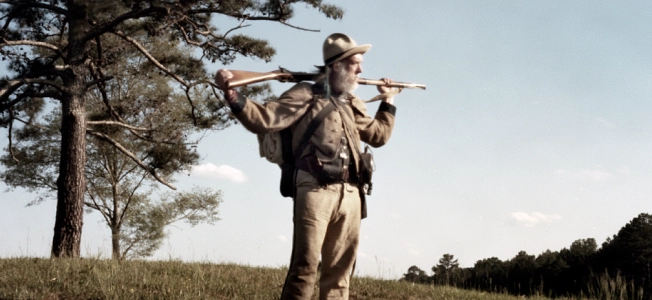
Thomas "Stonewall" Jackson, aka, Greg Randall at the reenactment of the Battle of Chancellorsville in Spotsylvania County, Va 2013.
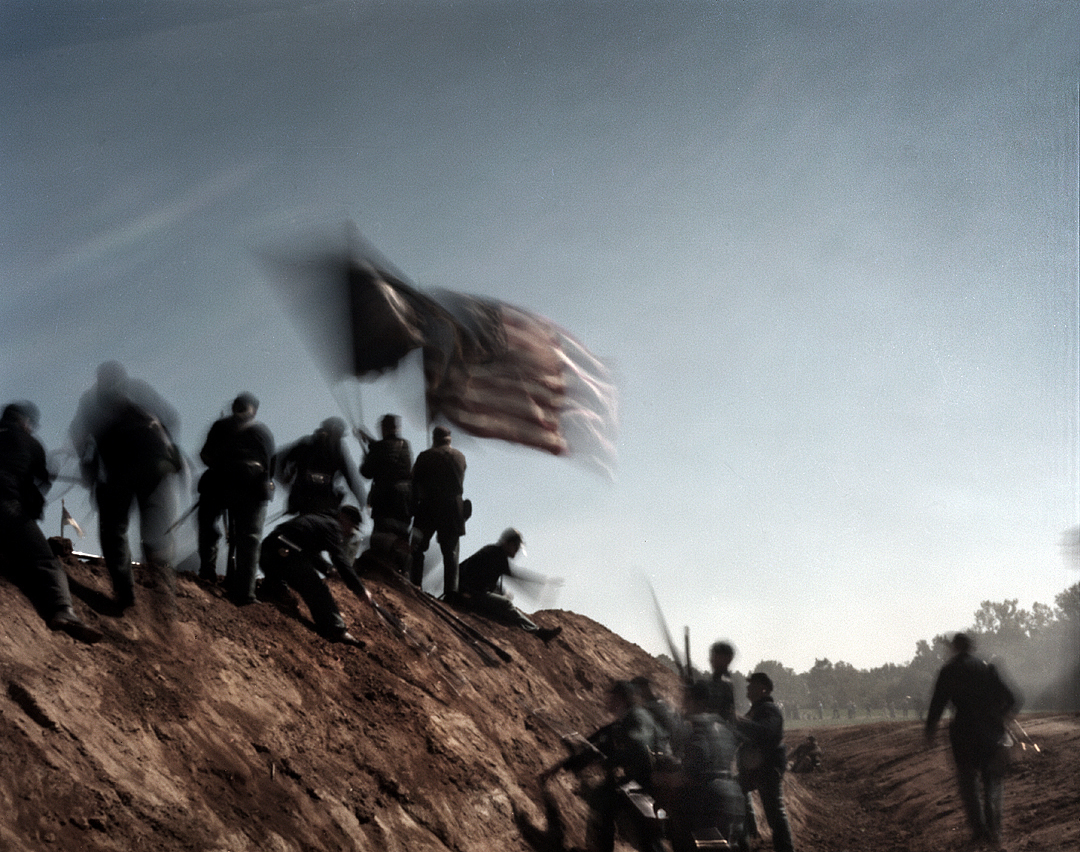
Thomas “Stonewall” Jackson, aka, Greg Randall at the reenactment of the Battle of Chancellorsville in Spotsylvania County, Va 2013.

The gentlemen taking the impression of Stonewall Jackson that weekend was a Virginian named Greg Randall.  Greg takes the impression of Jackson in events all over Virginia throughout the year and is a dead ringer, no pun intended,  for the late general.  Not knowing how the scenario would unfold and sure that the pinhole camera would not be able to record this fast moving event, I just hung back and planned to watch.

The site of the reenactment of the wounding of Stonewall Jackson

The site of the reenactment of the wounding of Stonewall Jackson

The site for this reenactment had a dirt road, either side overgrown with weeds, that led to a hill and another clearing above.  At the top of this hill I could just make out a few figures in Union blue and the muzzles of some cannon placed up there.  As the scenario unfolded, the North Carolina reenactors were deployed across the road about a hundred yards from the hill.

Marker of Stonewall Jackson's arm buried at Ellwood Manor the evening on May 2nd. 1863.  Orange County, Va 2013.

Marker of Stonewall Jackson’s arm buried at Ellwood Manor the evening on May 2nd. 1863. Orange County, Va 2013.

As the scenario began, Jackson and his staff rode down the dirt road, and started to make their way up the hill.  Just then, BABOOM!, the cannons go off, some of the horses rearing and Jackson and his staff turn about and quickly ride back the way they came.  As they approach the North Carolina troops, I hear one of these troopers scream out, “Union calvary on the road, open fire!” and a rippling volley of musketry rings out.  One of Jackson’s staff yells out, “Stop, you are firing into your own men!”, at which point the North Carolinians retort, “it’s a damn Yankee trick, fire!”, another volley rings out, Jackson slumps in the saddle and his aides ride up to keep the general from falling from his horse.  Jackson and his staff ride through these North Carolina troops at which point they are informed that they have just shot Stonewall Jackson.  The scenario is over.

Watching this from the sidelines was strange and moving.  This back and forth dialogue, for instance,  between Jackson’s staff and the North Carolinians is familiar to anyone who has studied the history.  The wounding and eventual death of Jackson was so devastating to the South that every aspect of this event has been written about extensively, including what was said that night in the wilderness when Jackson was mistakenly shot.

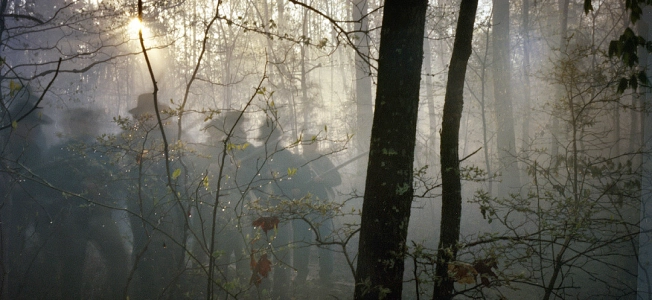
North Carolina troops kneel in prayer during a reenactment of the wounding of Stonewall Jackson, Spotsylvania County, Va 2013.

North Carolina troops kneel in prayer during a reenactment of the wounding of Stonewall Jackson, Spotsylvania County, Va 2013.

I walk up at this point and can’t help but notice that the North Carolina reenactors are visibly upset.  It was their ancestors who had mistakenly shot Jackson and that burden is still clearly apparent amongst these men.  Afterward these troopers knelt in prayer.  There wasn’t a dry eye among these grizzled impersonators and I noticed a certain feeling in the air, the atmosphere was charged with something, I could feel it.

Watching this event, along with me, was another reenactor/photographer, Carl Staub, who asks Greg, as Stonewall Jackson, to get down from his horse and lay on the ground and have his staff gather around to reenact the moment of the actual wounding.   I generally document these events without imputing myself into the scenes and, aside from portraits, do not set up pictures.  But “Stonewall” obliges and gets down from his horse and lays on the ground, the staff gathers and I prepared myself to get a picture of this moment.  Standing out of the photographers way, I quickly was able to pull off two frames with the pinhole camera and felt that these images were an unexpected gift.

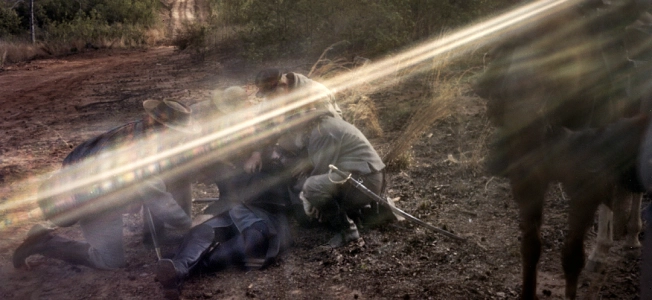
General Thomas "Stonewall" Jackson lay wounded after mistakenly being shot by his own men at a reenactment of the Battle of Chancellorsville in Spotsylvania County, Va 2013.

General Thomas “Stonewall” Jackson lay wounded after mistakenly being shot by his own men at a reenactment of the Battle of Chancellorsville in Spotsylvania County, Va 2013.

After I got the film developed I immediately noticed both negatives had a very strange, drastic, light streak across the images. Home-made pinhole cameras can occasionally have light leaks and such but in all the years I’ve worked with pinhole cameras I have never seen anything quite like this.  The rainbow colored light streak obscures most of the subjects in the scene but you can just make out Stonewall’s face below the light streak to the left of the sword hilt.  I do not believe in ghosts……..but I am wondering if the ghost of Stonewall Jackson made an appearance for this photo?

Back to: Chancellorsville

Link to: Slide Slow

Home

The Fateful Battle of Chancellorsville

The Battle of Chancellorsville is famous for Stonewall Jackson’s flank attack on the Union Army but notorious for his fatal wounding during the battle.  Click here to see the battlefield and a reenactment commemorating this epic battle.

Link to: The Battle of Chancellorsville

The site of Jackson's flank attack on the Battlefield at Chancellorsville, Va 2013

The site of Jackson’s flank attack on the Battlefield at Chancellorsville, Va 2013


The Road to Chancellorsville…

It’s early May 1863, Fighting Joe Hooker steals a march on Robert E. Lee.  Selected by President Lincoln to head up the Union armies after the disaster at Fredericksburg in December, General Hooker formed a bold plan; a secreted grand movement of the Union army around the flank of the enemy.  This would leave the Confederates with two choices, Fighting Joe told the President; to flee or be destroyed.

Re-enactors storm the "stone wall" during a reenactment in Fredericksburg, VA. 2012

Re-enactors storm the “stone wall” during a reenactment in Fredericksburg, VA. 2012

Chancellorsville in Spotsylvania County Virginia was just a simple cross roads in 1863 named for a tavern there, the Chancellor’s, along the Orange Turnpike ten miles west of Fredericksburg.  The Chancellor’s Tavern lay just outside an area famously called, the wilderness.  This dense, second growth forest was Hooker’s last obstacle on May 1st 1863 as the Union army moved east and sought to out flank and crush the Confederates at Fredericksburg…

Virginia’s Spotsylvania County was witness to intense fighting throughout the American Civil War.  Within the area of a few square miles you encounter the battlefields of Fredericksburg, Chancellorsville, battle of the Wilderness and the Battle of Spotsylvania Court House. Combined these four battles accounted for over 110,000 casualties during the war making this area of Virginia some of the most bloodied ground in America.

The Civil War 150 Pinhole Project returns to this area in May of 2013 for the 150th anniversary of the Battle of Chancellorsville.  Click the Follow icon at bottom right so you can receive an email when the story and images of the battlefield and reenactment of this epic battle are posted in mid May.

Link here for the National Parks Battlefields and 150th Chancellorsville Reenactment:

http://www.nps.gov/frsp/index.htm

http://battleofchancellorsville.com

The 150th anniversary of the Battle of Fredericksburg, 2012

The 150th anniversary of the Battle of Fredericksburg, 2012

Pinhole Shutter

new_cameraUnveiling a new pinhole camera system designed by my brother, Henry Falco.  Henry, always the perfectionist, was never happy with the exterior shutter design we had developed for these homemade pinhole cameras.  He felt the cameras could be more sleek and self contained.  The result is this new internal shutter system.  A simple lever design, the camera now has a shutter button on the face of the camera and internal working parts which simply opens and closes the pinhole.  Instead of sliding the shutter to expose the film I will now be “clicking” a shutter button.

This is a four inch camera is equivalent to a 28mm wide angle on a 35mm SLR camera.

Learn more about the project pinhole cameras: Pinhole Camera

A Place Called Shiloh

150th anniversary Shiloh Reenactment, Michie, Tennessee

150th anniversary Shiloh Reenactment, Michie, Tennessee

One hundred and fifty one years ago today one of the first epic battles of the Civil War was fought along the banks of the Tennessee River at a place called Shiloh.  In early April 1862 Ulysses S. Grant began to land his Union troops at Pittsburg Landing along the Tennessee for an eventual march on Corinth Mississippi, a vital railroad junction for the Confederacy.  On the evening of April 5th, as the Union troops rested in their camps, Confederate General Albert Sydney Johnson, looking to attack Grant while his troops were still consolidating, marched his 44,000 Confederate troops from Corinth to within a mile of Grant and waited.  At dawn on April 6th 1862, these Confederate forces came screaming from the woods in a surprise attack that would almost destroy Grant’s army.  Fortunately for Grant reinforcements would arrive that evening and on the following day Union forces counter attacked and eventually sent the Confederate troops retreating back towards Corinth.  The two days of fighting at Shiloh was the largest battle of the Civil War to date and would produce a staggering, 24,000 casualties.  Learn more about this pivotal battle at the links below:

Shiloh

Civil War Trust

Unconditional Surrender Grant

River Batteries on the Cumberland River at FT Donelson, Dover, TN 2012

River Batteries on the Cumberland River at FT Donelson, Dover, TN 2012

151 years ago, in February of 1862, Ulysses S. Grant with the help of the Union Navy captured the confederate stronghold of Fort Donelson along the Cumberland River in Dover, Tennessee.

Tree atop an earthen trench at Fort Donelson, Dover, TN 2012

Tree atop an earthen trench at Fort Donelson, Dover, TN 2012

Grant’s capture of Fort Donelson coincided with another successful river siege, one week earlier, at Fort Henry on the Tennessee River.  These two Union victories in the west would bring much needed good news to the North and secured Grant’s leadership in these early days of the Civil War.

Confederate trenches at Fort Donelson, Dover TN 2012

Confederate trenches at Fort Donelson, Dover TN 2012

At Donelson, Grant eventually landed ground troops, surrounded the fort and together with gunboats in the river bombarded the confederates into submission.  On the evening of February 15th 1862, after a failed break out attempt and with no hope in sight, confederate commanders decided to ask Grant for terms of surrender.  Grant famously replied,

“Sir, Yours of this date proposing Armistice, and appointment of Commissioners, to settle terms of Capitulation is just received.  No terms except unconditional surrender can be accepted. 

I propose to move immediately upon your works.  

I am Sir, very respectfully, Your obt. sevt.

US Grant, Brig. Gen.”

On the morning of February 16th, confederate Brig. Gen. Simon Bolivar Bruckner surrendered 12,000 confederate troops at Fort Donelson.

River Batteries on the Cumberland River at FT Donelson, Dover, TN 2012

River Batteries on the Cumberland River at FT Donelson, Dover, TN 2012

These victories for Grant were a huge blow to the Confederacy and the vital Cumberland and Tennessee Rivers, now under Union control, would be the waterways that would eventually lead the Union Army deep into the South.  When news of these victories reached the North, newspapers and the public focused on Grant’s accomplishment, they awarded him the sobriquet, Unconditional Surrender Grant.

The National Archive!

The Civil War 150 Pinhole Project will now have a permanent home at the Library of Congress…

“The United States Library of Congress has selected your website for inclusion in the historic collection of Internet materials related to the American Civil War Sesquicentennial. We consider your website to be an important part of this collection and the historical record.”

“The Library of Congress preserves the Nation’s cultural artifacts and provides enduring access to them. The Library’s traditional functions, acquiring, cataloging, preserving and serving collection materials of historical importance to the Congress and the American people to foster education and scholarship, extend to digital materials, including websites.”

Web Archiving Team
Library of Congress
Washington, D.C. 20540

1.29.2013

Civil War 150 Pinhole Project

Welcome to the Civil War 150 Pinhole Project Blog.  Join photographer Michael Falco as he visualizes and chronicles the Civil War from the 19th century soldiers’ point of view and highlights the haunting beauty of the War’s battlefields with the poetry of the pinhole camera.

Learn about this commemorative project on the “About” page:  About

See some of these images in the New York Times:http://www.nytimes.com/2013/01/27/business/abraham-lincoln-as-management-guru.html?ref=business

Cornfield150

Gun smoke lingers in the Cornfield on the 150th anniversary of the Battle of Antietam, Sharpsburg, Maryland 2012


Fredericksburg

See the battlefield and a reenactment commemorating the 150th anniversary of the Battle of Fredericksburg, Virginia.  See re-enactors cross the Rappahannock River by pontoon bridge and storm the heights above Fredericksburg in the reenactment of the epic battle…..

Link to Fredericksburg: Fredericksburg

Union re-enactors fire cannons across the Rappahannock River into the City of Fredericksburg, during a reenactment of the Battle of Fredericksburg, VA. 2012

Union re-enactors fire cannons across the Rappahannock River into the City of Fredericksburg, during a reenactment of the Battle of Fredericksburg, VA. 2012

Seven Days Battles

Visit the Battlefields around Richmond Virginia and sites of the Seven Days Battles culminating in “Lee Takes Command” Seven Days Battles reenactment in Elizabethtown, PA.

Visit  the Seven Days Battle page for story and more images…..Seven Days Battles


Reenactment of the Battle of Glendale in Elizabethtown, PA. 2012

Reenactment of the Battle of Glendale in Elizabethtown, PA. 2012

Follow

Get every new post delivered to your Inbox.

Join 28 other followers